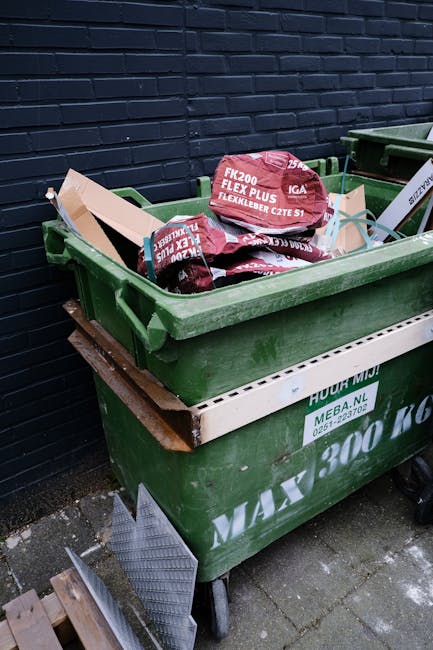
Myths about free council rubbish collection debunked
If you have ever tried to get rid of a bulky sofa, an old mattress, or a pile of garden waste, you will know how confusing council collection rules can be. One neighbour says it is free. Another says you will wait weeks. Someone else swears the council will take anything, no questions asked. Truth be told, a lot of that is half-remembered advice and pub-chat logic, not reality.
This guide to Myths about free council rubbish collection debunked cuts through the noise. We will look at what people often get wrong, how council and private rubbish collection usually work in the UK, where the real limits are, and what to do when you need a quicker or more reliable solution. If you are trying to save money without creating a headache, you are in the right place.
One small but important point before we start: council services vary by area, item type, and collection schedule. So the trick is not to assume. The trick is to know what to check, what to expect, and when a different option may actually be the smarter one.
Table of Contents
- Why Myths about free council rubbish collection debunked Matters
- How Myths about free council rubbish collection debunked Works
- Key Benefits and Practical Advantages
- Who This Is For and When It Makes Sense
- Step-by-Step Guidance
- Expert Tips for Better Results
- Common Mistakes to Avoid
- Tools, Resources and Recommendations
- Law, Compliance, Standards, or Best Practice
- Options, Methods, or Comparison Table
- Case Study or Real-World Example
- Practical Checklist
- Conclusion
- Frequently Asked Questions
Why Myths about free council rubbish collection debunked Matters
Rubbish removal sounds simple until you actually need it done. Then the myths start creeping in. Free collections, same-week pickups, unlimited items, no sorting required. Nice idea. Usually not true.
Why does this matter? Because believing the wrong thing can cost you time, money, and a fair bit of frustration. If you book the wrong service, leave waste out incorrectly, or assume the council will handle a job that is outside its rules, you may end up with missed collections, extra charges, or waste sitting around for another week or two. And let's face it, a broken wardrobe in the hallway gets old fast.
There is also a wider practical issue. Many households are trying to balance budget, convenience, and responsibility. That is sensible. But if you only focus on the word free, you can miss the bigger picture: collection limits, restricted items, booking windows, and whether the service is actually suitable for what you need to move.
For people in London especially, local rules and collection arrangements can differ quite a bit from borough to borough. Some areas offer bulky waste collection, some provide special booking systems, and some restrict items or collection frequency. That means good advice has to be specific enough to help, but cautious enough not to overpromise. A page like this is useful because it helps you ask the right questions before you book.
Key takeaway: the biggest myth is not that councils do nothing. It is that council rubbish collection is always free, always fast, and always suitable. In practice, the details matter.
How Myths about free council rubbish collection debunked Works
To debunk the myths properly, it helps to understand how council rubbish collection usually works in real life. Most councils run standard household waste and recycling services first, then add separate systems for bulky items, garden waste, or large item pickup. Those extra services may be free in some situations, charged in others, or simply unavailable for certain items.
Here is the basic pattern most people run into:
- Standard bins: regular household waste and recycling collected on a set schedule.
- Bulky item collections: larger items like sofas, beds, wardrobes, or white goods, often by appointment.
- Restricted waste streams: some items need special handling because of safety, environmental, or disposal rules.
- Private alternatives: waste removal services that can collect at a time that suits you, often for a fee.
The word free causes most of the confusion. Some councils may include a limited free service for certain residents, certain benefits, or certain categories of waste. Others may not. Even where a free collection exists, it often has conditions attached. You may need to book in advance, place items outside in a certain way, or separate different materials. In a cold wet morning in London, that little detail can be the difference between a clean pickup and a missed one. Small thing, big annoyance.
The practical part is this: council collection is generally designed for everyday household needs and public service efficiency. It is not always designed for speed, flexibility, or awkward one-off clearances. If you need a same-day garage clear-out or a full flat clearance, a council option may be limited. That does not make it bad. It just means it has a different job to do.
If you are comparing options, services such as council rubbish collection and bulk waste collection are worth understanding side by side. For larger household jobs, people also look at large item collection or a more complete rubbish removal service when the council route is too narrow.
Key Benefits and Practical Advantages
Debunking myths is not just about correcting mistakes. It also helps you make better decisions. Once you understand what council collection can and cannot do, you can plan smarter and avoid paying for the wrong service. That alone is useful.
Here are the real benefits of understanding the facts:
- You avoid false expectations. No one likes waiting around for a pickup that was never realistic in the first place.
- You compare cost more accurately. Free is not always available, and cheap is not always best value.
- You reduce missed collection problems. Clear guidance helps you place items, sort waste, and book correctly.
- You choose the right disposal route. Some items belong in specialist disposal streams, not ordinary bulky waste.
- You save time on repeat calls. Fewer misunderstandings means less back-and-forth with the council or provider.
There is a practical advantage people often overlook: once you know the limits of council services, you can use them strategically. For example, a resident might use a council large-item pickup for one manageable item, then arrange private clearance for the rest. That mix-and-match approach can be more efficient than insisting everything must fit one system.
It also helps with household planning. If you are clearing space before a move, redecorating, or replacing old furniture, knowing the service structure means you can plan dates and avoid the awkward scene where a dismantled wardrobe is leaning against the wall for ten days. Nobody wants that. Nobody.
Who This Is For and When It Makes Sense
This topic matters to a wider group than people first think. Yes, it is useful for anyone with a bulky item to dispose of, but it is especially relevant if you are in one of these situations:
- You are a homeowner or tenant trying to clear a few large household items.
- You are moving out and need to dispose of unwanted furniture quickly.
- You have inherited a property or are dealing with a partial house clearance.
- You are refreshing a flat and need old items removed without leaving mess in shared spaces.
- You are a landlord or letting agent needing a reliable way to clear left-behind waste.
- You need to dispose of items that are too big for normal bins, like beds, sofas, or white goods.
It also makes sense for anyone comparing council and private collection options. Maybe the council route is good enough. Maybe it is not. The point is to decide based on the job in front of you, not on a myth you heard from someone two streets over.
In London, this comes up often in flats with narrow stairwells, parking restrictions, or shared entrances. A service might technically be available, but if your item needs two people to carry it down three flights of stairs, you need to think beyond a simple collection slot. That is where a more flexible option can save a lot of hassle.
If you are dealing with furniture, household goods, or a bigger property clear-out, pages like furniture collection, house clearance, and home clearance may help you understand the broader options available.
Step-by-Step Guidance
If you are trying to figure out whether council collection is the right move, take it one step at a time. It is not glamorous, but it works.
- List exactly what needs removing. Write down each item and whether it is furniture, general rubbish, garden waste, electricals, or something else.
- Check your local council's collection rules. Look for whether bulky waste is free, paid, booked, limited, or not offered.
- Separate ordinary waste from specialist items. A mattress is not the same as a fridge. A broken chair is not the same as builder's waste.
- Measure larger items. This is easy to skip. It is also how people end up underestimating access issues.
- Decide whether you can wait. If the timeline is loose, a council option may be fine. If you need it gone fast, maybe not.
- Compare the total effort, not just the fee. A "free" collection can still cost you time, lifting, sorting, and several days of waiting.
- Book the service that fits the job. If the council route is too restrictive, choose a provider that handles the full load properly.
A good rule of thumb: if you are spending more energy trying to make a cheap service work than it would take to use the right service, step back and reassess. A quiet Saturday morning can disappear very quickly when you are wrestling a sofa through a doorway. Ask me how people discover that. Well, they usually don't need to ask twice.
For bigger household jobs, it can be worth checking options like bulky waste collection, waste collection, or a more targeted service such as mattress disposal if the item is awkward or heavily used.
Expert Tips for Better Results
Here is where a little experience saves a lot of grief. These are the practical details that make collections smoother and reduce surprises.
- Photograph items before booking. This helps you compare services and avoid misunderstandings about size or condition.
- Keep access clear. Hallways, front steps, shared entrances, and parking spots matter more than people expect.
- Group similar items together. Sorting furniture, electricals, and general waste separately makes every collection easier.
- Check for disassembly needs. Flat-pack furniture, beds, and wardrobes may need to be taken apart first.
- Ask about restrictions early. A quick question now can save a missed pickup later.
- Think about recycling. If items can be reused, repaired, or recycled, that is often the better route environmentally.
One of the best habits is to check the service details before the clutter becomes a problem. That sounds obvious, but in real life people wait until the room feels cramped and the deadline is tomorrow. Then every decision gets rushed. Better to sort it when you still have space to think.
If sustainability matters to you, take a look at how a provider approaches sorting and recovery. A reputable service should be able to explain what happens to reusable furniture, mixed waste, and recyclable materials. You do not need a lecture, just a straightforward answer. That is usually enough to tell whether they know their job.
Common Mistakes to Avoid
Most collection problems are not dramatic. They are ordinary, preventable mistakes. Boring, really. But very expensive in time.
- Assuming "free" means unlimited. It rarely does.
- Leaving the wrong item out. Councils and collectors may refuse items that do not match the booking description.
- Ignoring booking lead times. A collection is not instant just because you need it quickly.
- Not checking access. A narrow stairwell, locked gate, or parking issue can derail the whole job.
- Mixing hazardous or restricted waste with general items. That can create safety and compliance issues.
- Forgetting dismantling or bagging requirements. Some services expect items prepared in a specific way.
Another common slip is assuming every bulky item is treated the same. A sofa, for instance, may be collected under a bulky waste service, but a fridge may need a different route because of its components and handling requirements. If you lump everything together, you can end up with a booking that only partly solves the problem. Bit of a nuisance, that.
Also, be careful with "someone said the council takes it." That may be true in one borough and completely wrong in another. Local variation is the rule, not the exception.
Tools, Resources and Recommendations
You do not need fancy tools for this, just a sensible approach. Still, a few simple resources can make the process much smoother.
- Phone camera: for photographing items, access routes, and any label or model details.
- Tape measure: essential for beds, wardrobes, appliances, and tight doorways.
- Notebook or notes app: keep item lists and booking details in one place.
- Bin bags and gloves: helpful when sorting smaller loose waste before collection.
- Flat-pack tools: for disassembling furniture if required.
On the service side, useful starting points include council large item collection, furniture disposal, sofa removal, and bed disposal if those are the items taking up space. If you are dealing with a mixed load, waste removal or waste clearance may be a better fit.
My honest recommendation? Start with the clearest description of what you have, then work backwards to the service. That simple habit prevents most booking mistakes. It is not glamorous, but it is effective.
Law, Compliance, Standards, or Best Practice
When rubbish collection is involved, compliance is not something to shrug off. You do not need to become a legal expert, but you should understand the basics of safe, lawful disposal and why it matters.
In the UK, householders, landlords, and businesses all have a responsibility to dispose of waste properly. That means using legitimate collection arrangements, avoiding fly-tipping, and separating items when required. If a service is collecting on your behalf, it should be clear about what it accepts, how waste is handled, and whether any items require special treatment.
Best practice usually includes the following:
- Using a trusted collection route rather than leaving waste in an unsupervised spot.
- Checking whether the item needs specialist handling, especially for electricals or appliances.
- Keeping access safe for whoever is lifting and loading the waste.
- Making sure the collection is agreed in writing or through a clear booking record.
- Choosing a provider that can explain its safety and disposal approach plainly.
If you are unsure about what a council or private provider will take, ask before collection day. That sounds small, but it is one of the cleanest ways to avoid disputes. Also, be careful with items that may contain hazardous components, sharp edges, or liquid residues. Common sense goes a long way here, which is fortunate because the bins are not interested in arguments.
For businesses or property managers, good waste practice matters even more. A small mistake can quickly become a nuisance for residents, staff, or neighbours. If you are managing regular clearances, pages like business waste removal and office clearance can be useful context for deciding whether a council-style service is enough.
Options, Methods, or Comparison Table
Sometimes the fastest way to cut through the myths is to compare the main options side by side. There is no single winner for every situation. It depends on your items, your timeline, and how much lifting you want to do yourself.
| Option | Best for | Typical strengths | Common limitations |
|---|---|---|---|
| Council rubbish collection | Routine local bulky waste needs | Can be cost-effective, familiar, locally managed | May have booking delays, item limits, and restrictions |
| Private rubbish removal | Quick or more flexible clearances | Convenient timing, wider item handling, less waiting | Usually paid, costs vary by load and access |
| Specialist item collection | Single awkward items like mattresses or appliances | Focused handling for specific waste types | Not ideal for mixed or full-property clearances |
| Full clearance service | Homes, flats, garages, lofts, or offices with lots to remove | Comprehensive and time-saving | Often unnecessary for just one or two small items |
The table above is a sensible starting point, not a rigid rulebook. A lot depends on access, item size, and how much work you want to do yourself. For example, if you have a single mattress and a clear booking window, a targeted service may be enough. If you have a mix of furniture, boxes, and old bits from the shed, a broader clearance service can be much easier.
That is why understanding the myths matters so much. Once you see the options clearly, the choice gets a lot less emotional and a lot more practical.
Case Study or Real-World Example
Here is a realistic example. A tenant in a London flat is moving out on a Friday. They have a worn sofa, a broken bed frame, a small pile of packaging, and a fridge that no longer works. At first, they assume the council will take everything for free because the items are household waste.
After checking the collection rules, they realise the items are not all treated the same. The sofa may fit one service, the fridge may need a different route, and the packaging can be dealt with separately. They also discover the council slot is not available before moving day. Not ideal.
So they split the job. The smaller packaging is sorted for standard waste, the old furniture goes through a more suitable collection route, and the fridge is handled as a separate appliance removal. The whole thing becomes less stressful because the plan matches the reality of the waste, not the myth.
That is the main lesson. Most collection problems are not caused by the items themselves. They are caused by mismatch. Wrong assumptions, wrong service, wrong timing. Once you remove the guesswork, the job gets easier very quickly.
It is one of those dull little victories that feels surprisingly good. You open the room afterwards and it actually feels bigger. Cleaner, quieter too.
Practical Checklist
Use this checklist before you book any council or private rubbish collection:
- Have I listed every item that needs removing?
- Do I know whether the items are general waste, furniture, appliances, or specialist waste?
- Have I checked whether my council offers a free bulky collection, a paid one, or no service for this item?
- Do I know the booking lead time?
- Can the items be carried out safely and easily?
- Do I need to dismantle anything first?
- Have I taken photos or measurements?
- Do I understand any access issues, like stairs, parking, or shared entrances?
- Am I comparing total effort as well as price?
- Would a private or specialist service be more practical than waiting for council collection?
If you can tick most of those off, you are in good shape. If several answers are still fuzzy, pause and clarify before booking. A few extra minutes now can save a very long afternoon later.
Get a free quote today and see how much you can save.
Conclusion
The biggest lesson from Myths about free council rubbish collection debunked is simple: do not let the word free do all the thinking for you. Council collections can be useful, but they are not always free, not always fast, and not always the best fit for larger or awkward jobs. Once you understand the rules, the limits, and the alternatives, the whole process becomes much less stressful.
Whether you are clearing one bulky item or sorting a bigger mess after a move, the right decision is usually the one that saves time, avoids confusion, and gets the waste dealt with properly. That is the real win. Not the cheapest-sounding option on paper, but the one that actually works in your home, on your schedule, with the least hassle.
And honestly, that is a pretty good outcome. Less clutter, less noise, less nonsense. Sometimes that is all you need.
Frequently Asked Questions
Is council rubbish collection always free in the UK?
No, not always. Some councils offer free collections for certain items or residents, while others charge for bulky waste or have limits on what they will take. Always check your local council's current rules before assuming the service is free.
What is the biggest myth about free council rubbish collection?
The biggest myth is that councils will collect any large household item for free, quickly, and without conditions. In practice, services vary by area, item type, booking availability, and access requirements.
Can I leave bulky waste outside without booking a collection?
Usually, no. Leaving waste outside without an agreed collection can lead to missed pickups, obstruction problems, or even fly-tipping concerns. It is much safer to book properly and follow the instructions you are given.
What items are usually hardest to arrange through council collection?
Items like fridges, mattresses, large sofas, and mixed loads can be trickier because they may need different handling or have specific restrictions. If you have a varied pile, a broader waste removal service may be more practical.
How long does council bulky waste collection usually take?
That depends on the council and how busy the service is. Some areas can offer a reasonable wait, while others have longer lead times. If time matters, it is worth checking the earliest available booking before making assumptions.
Is a private rubbish removal service better than council collection?
Not always. Council collection can be fine for a simple, low-urgency job. A private service tends to be better when you need flexibility, faster timing, or help with more items at once. It really depends on the job.
Do I need to separate furniture from general rubbish?
Often yes. Separating items makes it easier to match the right service and avoid refusals. It also helps if you want to recycle or reuse part of the load rather than sending everything the same way.
Can council collection take broken appliances?
Sometimes, but not always under the same rules as ordinary bulky items. Appliances may need specialist handling, especially if they contain electrical or cooling components. Check before booking so you do not get caught out.
What should I do if I need rubbish removed quickly?
If you cannot wait for a council slot, look at a private rubbish removal or clearance service. These are often the better choice when you have a moving deadline, a landlord inspection, or a cluttered room you need back fast.
How do I know if my waste needs specialist disposal?
If an item is electrical, hazardous, bulky, contaminated, or awkward to lift, it may need specialist attention. When in doubt, describe the item clearly before booking and ask whether it can be collected as part of the service.
What if the council says it will not collect my item?
That can happen if the item is restricted, outside the service rules, or not bookable in your area. In that case, a private collection, specialist disposal, or full clearance service may be the practical next step.
Is it worth using a rubbish removal service for just one item?
Sometimes yes, especially if the item is heavy, difficult to move, or urgent. If you are spending a lot of time trying to work around council rules, a paid collection may actually save stress and effort.