Insurance and Safety for Bulky Waste Collection Services
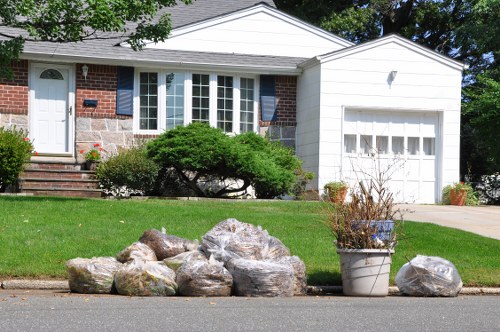 Bulky waste collection demands a professional approach to protect customers, staff and the public. This page explains our approach to public liability insurance, staff safety training, personal protective equipment and a robust risk assessment process. Whether referred to as bulky-item removal, bulky rubbish pickup or bulk waste collection services, these measures form the foundation of safe, compliant and reliable removal operations.
Public liability is the cornerstone of any reputable bulky waste pickup business. Public liability insurance covers claims from members of the public for injury or property damage that might occur during a removal. Policies are typically expressed in monetary limits, and trustworthy operators hold sufficient cover to respond to claims quickly and without dispute. We maintain clear records of our certificates of insurance and ensure they are renewed and reviewed annually.

What public liability means for bulky rubbish collection
Reputable bulk waste collection providers carry not only general public liability but often additional policies such as vehicle insurance, goods-in-transit and, where applicable, environmental or pollution liability. These layers of cover reduce exposure to unexpected costs after an incident and demonstrate to clients and local authorities that the bulky waste disposal service operates responsibly. Strong insurance arrangements are a business risk control, not a substitute for safe working practices.Staff Training and Competency for Bulky Waste Services
Staff competence is essential in any bulky-item removal operation. Our training programs cover manual handling, vehicle loading procedures, safe lifting techniques, securement of bulky items and the correct use of any lifting equipment. Training is documented through competency records and refreshed on a scheduled basis so staff remain current with industry standards. Refresher sessions and practical assessments help reduce injuries and ensure consistent, safe service delivery.Onboarding includes an introduction to company safety policies, emergency procedures and incident reporting. Supervisors are trained to identify hazards and mentor newer staff during live jobs. We use toolbox talks before shifts to discuss specific site risks, emphasizing that safety is a shared responsibility. In addition to practical training, staff receive instruction on communication with customers to minimize misunderstandings about scope and access during a bulky waste pickup.
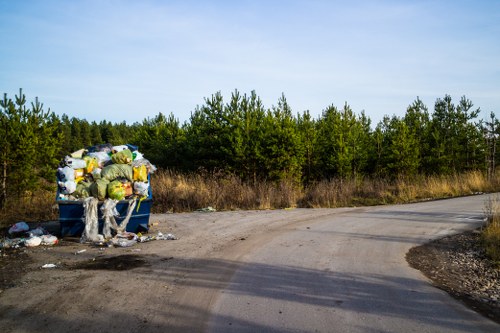 Specialist training is provided for complex removals such as bulky appliances, mattresses and items containing fluids or hazardous components. Where mechanical aids are used, staff are certified to operate trolleys, tail lifts and lifting straps safely. Training also covers safe segregation of waste destined for recycling versus disposal, which reduces environmental risk and aligns with waste transfer regulations.
Personal protective equipment (PPE) is a visible and practical control measure for bulky waste collection. Standard PPE for bulky waste operations includes:
- High-visibility clothing to keep staff visible to traffic and site visitors
- Gloves suited to handling sharp edges and abrasive surfaces
- Steel-toe footwear or protective boots for foot injury prevention
- Eye protection and masks when dust or airborne particles are possible
PPE must be maintained, fit for purpose and replaced when worn. Supervisors check PPE at the start of each shift and record any defects. Using appropriate PPE helps prevent minor injuries from becoming major incidents during bulk waste collection and disposal activities.
Risk assessment underpins safe bulky waste collection. Before every job, teams conduct a site-based assessment to identify hazards related to access, traffic, stairways, unstable items and environmental conditions. These dynamic risk assessments complement written pre-job planning and ensure that staff respond to the actual site conditions rather than a generic plan. Risk mitigation may include additional staff, alternative access routes or specialised handling equipment.
Risk assessments are recorded and retained as part of our operational files. They include the nature of hazards, the assessed level of risk and the controls implemented. Regular review of risk assessment outcomes helps refine company processes and informs future training. Where a job presents significant residual risk, work is paused until safe systems are agreed and implemented.
![A collection of various discarded household waste items arranged on a clean surface, including glass bottles of different shapes and colours, such as green, clear, and amber, with some featuring caps or labels. There are also metal containers like cans and tins, some crumpled or flattened, along with paper-based waste like crumpled newspapers and cardboard boxes, which are partially opened or flattened. Plastic items are present, including spray bottles, containers with lids, and foam or packaging materials, some stacked or leaning against each other. The textures vary from smooth glass and plastic to the crinkled paper and cardboard, with colours ranging from transparent and green to red and brown. The waste appears organized yet cluttered, suggesting a typical household rubbish collection scenario. The background hints at an outdoor or driveway setting, consistent with Bulky Waste Collection's rubbish removal services in the local area, possibly near [POSTCODE] or [TOWN], emphasizing the environmentally conscious disposal of domestic waste in the UK context. The lighting is neutral and even, highlighting the diverse materials and textures of the waste items.](/pub/_photos/rubbish/f1350696256.jpg)
Incident reporting, documentation and continuous improvement
All incidents, near misses and hazard observations are recorded using standard forms. Prompt reporting allows for investigations that identify root causes and corrective actions. We combine this incident data with training records and insurance details to support continuous improvement. This approach reduces claims frequency and severity, benefiting both safety performance and insurance premiums for bulky waste pickup operations.
Operational controls and client communications
Effective bulky waste removal depends on clear client communication. Before a job, we confirm the scope, vehicle access and any unusual items that might affect safety or require specialist disposal. Clients are asked to declare large appliances, items with fluids, or waste that may be contaminated. Clear communication avoids surprises on site and contributes to a safe, efficient bulky rubbish collection.Final controls include pre-departure vehicle checks, secure load restraint and waste transfer documentation where required. Staff follow set procedures to secure items and complete handover notes if necessary. These steps reduce the risk of road incidents and ensure legal traceability for items handled during bulky waste disposal operations.
Summary: comprehensive insurance, ongoing staff training, correct PPE and a formal risk assessment process combine to deliver a safe, reliable bulky waste removal service. Maintaining records, reviewing incidents and communicating with clients are practical steps that protect the public, employees and the business. Together, these measures form a strong safety culture for any bulk waste collection company.